Chegg: AI Search

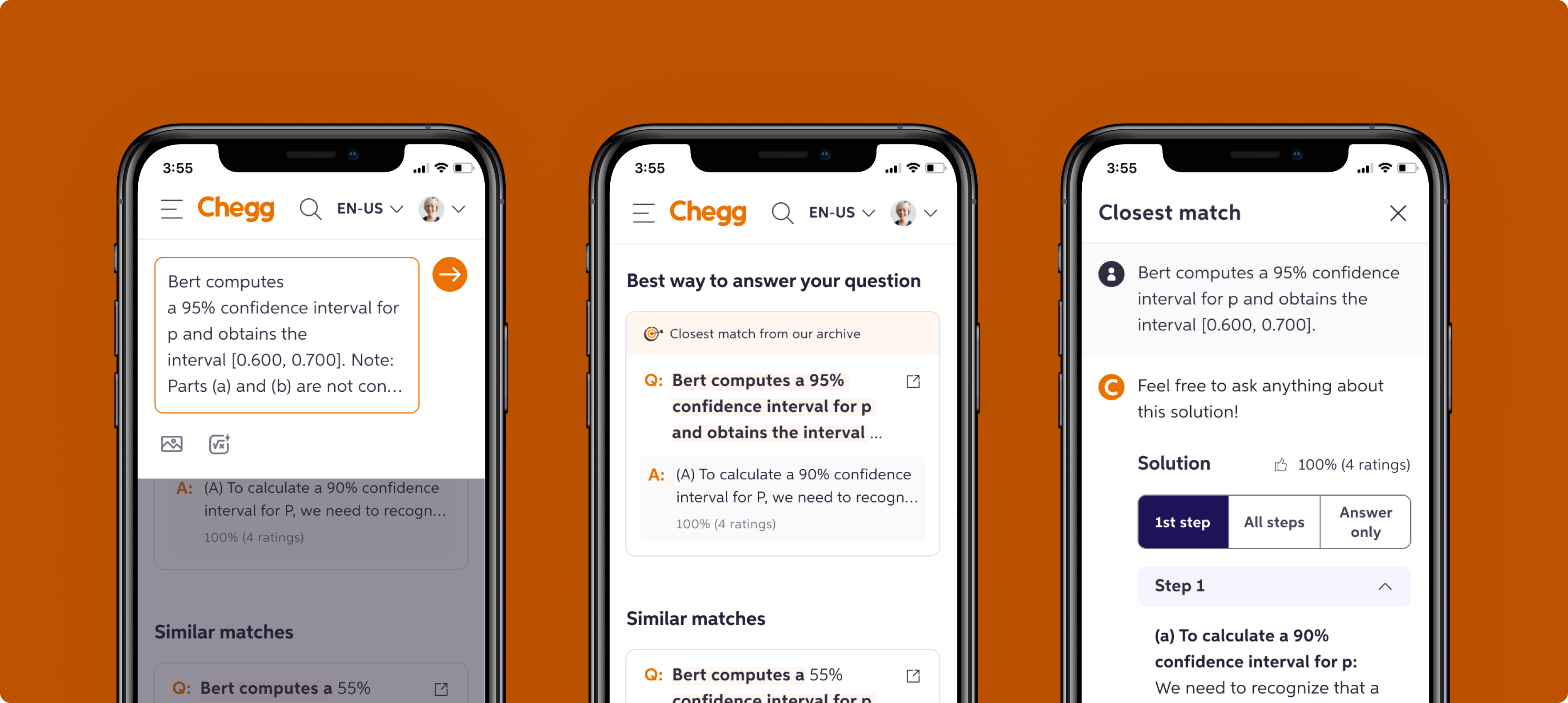
At Chegg, as a Senior Product Designer, I changed the whole product paradigm from an AI chat experience to an AI search experience for students to browse more solutions to their homework-help questions more easily and faster, which led to a 2% increase in satisfaction and a 2% reduction in cancellation requests.

role / design lead

timeline / jul 2024 - sep 2024
outcome / increase content consumption by 9%, satisfaction by 2%,
and reduce cancellation request by 2%
CONTEXT
Chegg is an EdTech company whose core product is a QnA platform where 5M+ paying students get step-by-step solutions to their homework questions.
One of Chegg's core products is a QnA platforms where students can ask homework-help questions and receive step-by-step solutions created by subject matter experts or Chegg AI.
PROBLEM
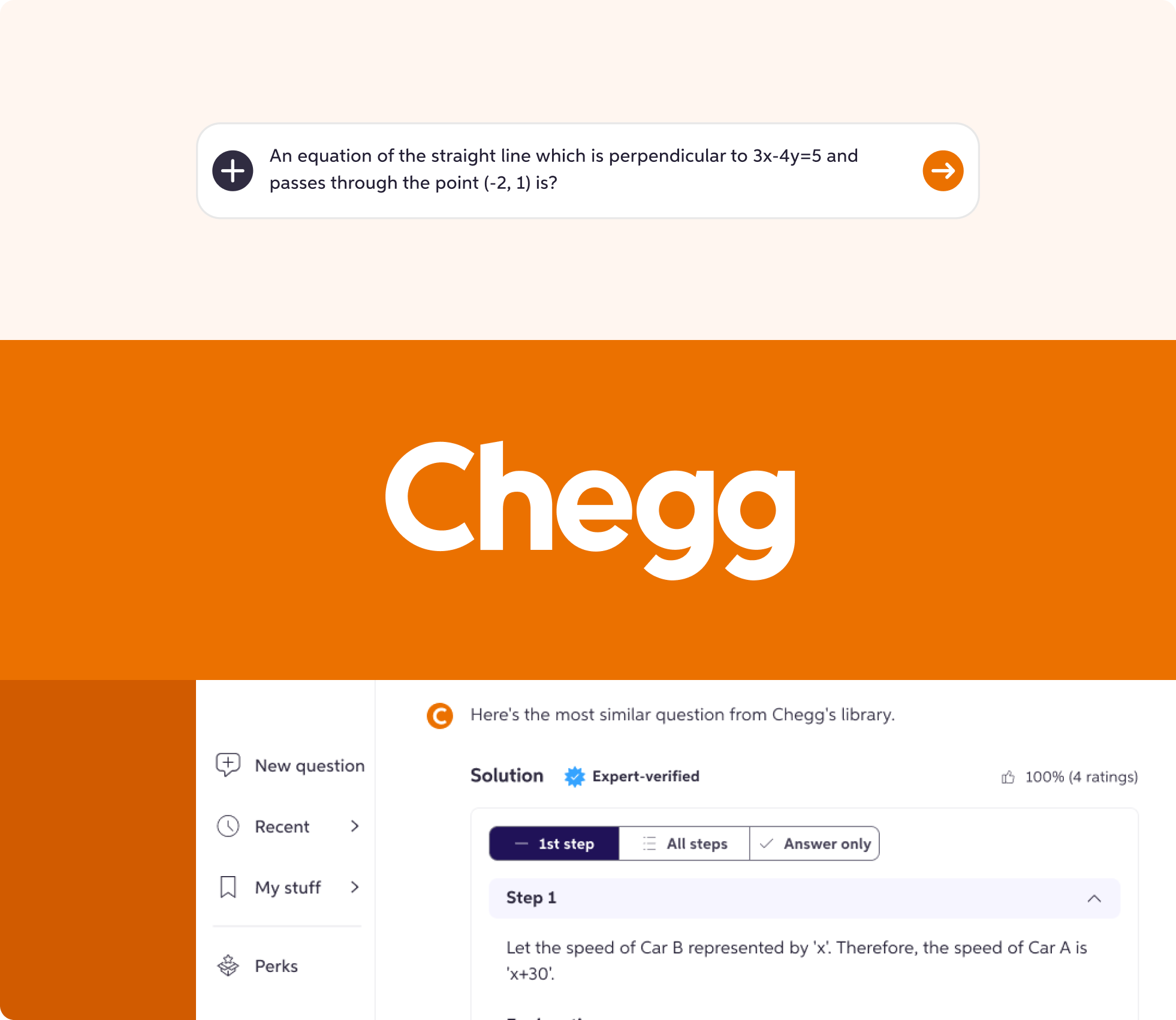
As free GenAI tools rose, key metrics declined because Chegg's experience of ask, get a solution, and follow up was not adding much value compared to any other AI chat experience.
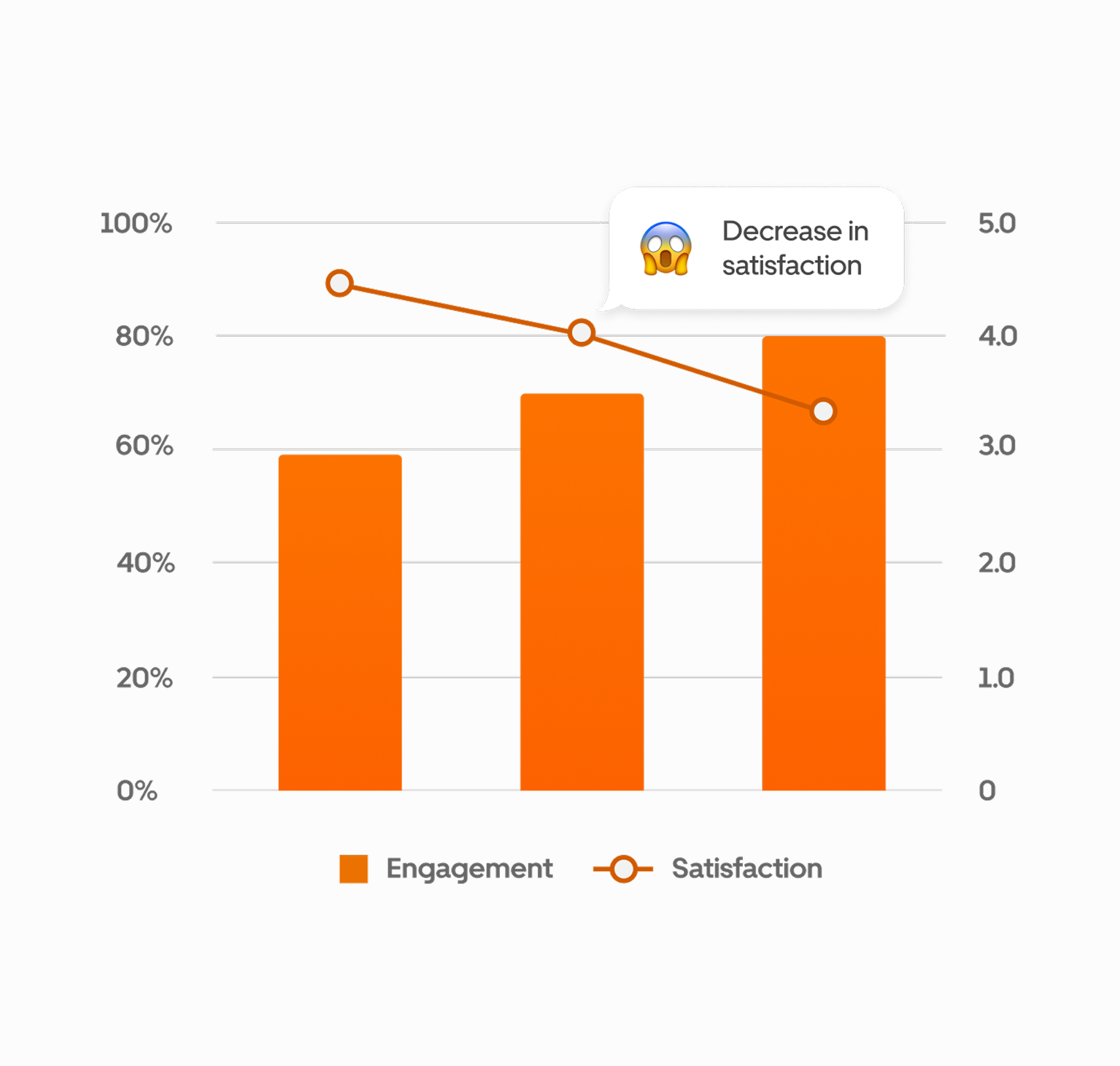
With the rise of free GenAI tools, students shifted to using them, causing satisfaction to decrease and subscription cancellation requests to increase. This was because the current user experience was indistinguishable from other free AI tools, leaving students with no reason to pay for it.
SOLUTION
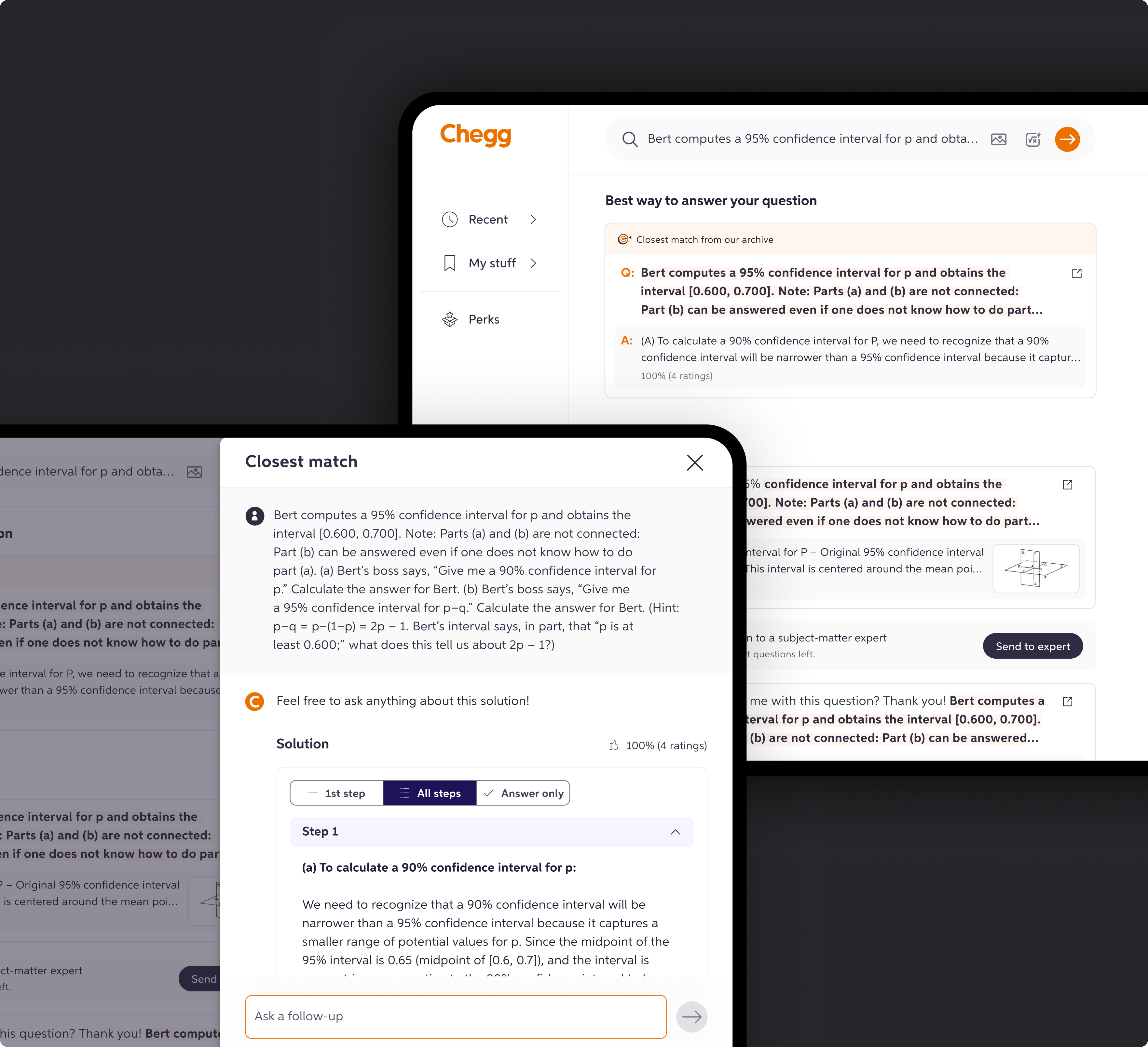
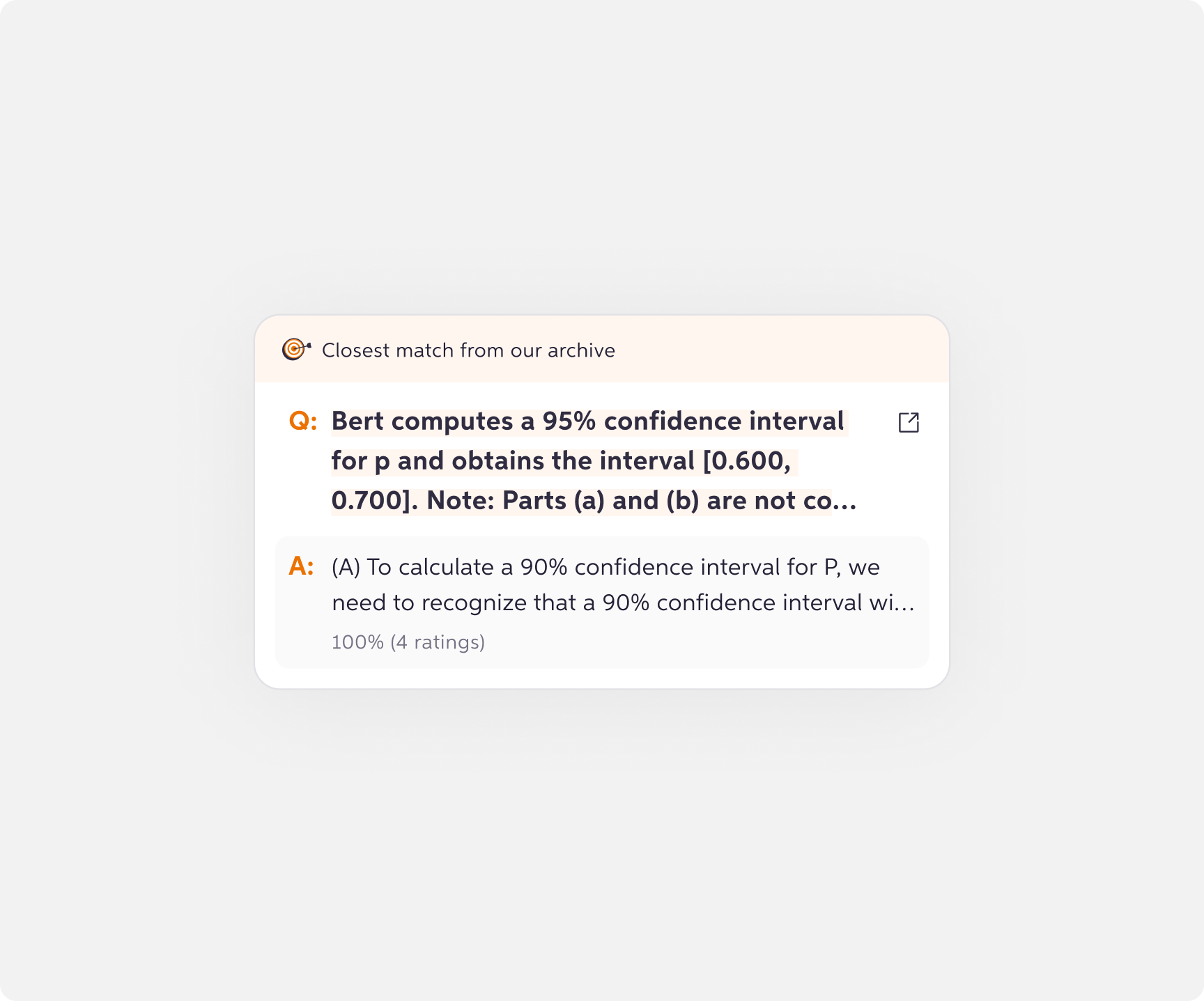
Introduce a new UX paradigm – a search  with panel view – to streamline solution discovery journey, leveraging Chegg's vast solution archive as its key differentiator.
Based on user research, we learned that students come to Chegg because they value our archived content and browse more than one solution for credibility. Through a 3-day design sprint with stakeholders, we aligned on using this as our differentiator and made a big bet on a new user experience.
IMPACT
We achieved a significant increase in our success metrics: both engagement and satisfaction, also it reduced the cancellation requests, which led revenue impact.
Content Consumption
+ 9.2%
Satisfaction Score
+ 2.8%
Subscription Cancel Rate
- 2.0%